What is a Reverse Osmosis (RO) plant?
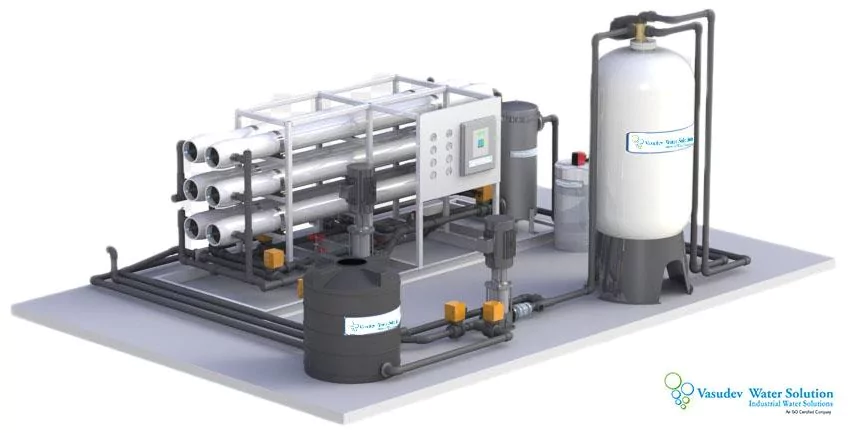
A Reverse Osmosis plant is a water purification system that removes dissolved salts, hardness, chemicals, bacteria, and other impurities from water using a semi-permeable membrane.
What is the use of an industrial RO plant?
Industrial RO plants are used for:
- Boiler feed water
- Cooling tower makeup water
- Pharmaceutical water treatment
- Food & beverage processing
- Textile and chemical industries
- Water recycling and reuse
What TDS can an RO plant handle?
RO plants can typically treat water with TDS from 200 ppm to 100,000+ ppm, depending on the system design and number of stages.
What is the recovery of an RO plant?
- Standard RO: 50-75%
- High Recovery RO: 80-92% (depending on water quality and design)
What is the difference between single-stage and two-stage RO?
Single-stage RO has one membrane stage, suitable for moderate TDS. Two-stage RO treats first-stage reject or permeate for higher purity and higher recovery.
How often should RO membranes be replaced?
Typically 2-5 years, depending on feed water quality, pretreatment, operating pressure, and maintenance.
What pretreatment is required before an RO plant?
Common pretreatment includes:
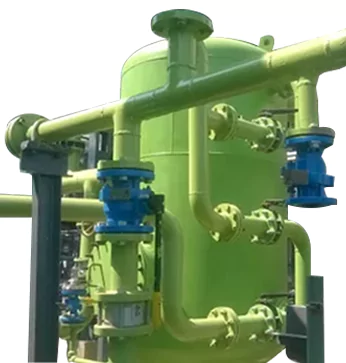
- Pressure Sand Filter
- Activated Carbon Filter
- Water Softener or Antiscalant dosing
- 5 Micron Cartridge Filter
Can RO water be used for drinking?
Yes. RO water is safe for drinking when the system is properly designed and maintained. For packaged drinking water, additional polishing and disinfection may be required.
What is a high recovery RO plant?
A high recovery RO plant is designed to reduce water wastage by recovering a larger percentage of feed water, making it ideal for industries with high water consumption.
What is the operating pressure of an RO plant?
- Brackish water RO: 8-18 bar
- High TDS water: 15-25 bar
How much electricity does an RO plant consume?
Power consumption depends on capacity and pressure. Example:
- 1000 LPH: 1-2 kW
- 5000 LPH: 5-10 kW
- 10 m³/hr: 15-30 kW
Can RO reject water be reused?
Yes. Reject water can be reused for:
- Cooling tower
- Gardening
- Floor washing
- Toilet flushing
- Second-stage RO treatment
What is the maintenance required for an RO plant?
Regular maintenance includes:
- Filter media backwashing
- Cartridge replacement
- Membrane cleaning (CIP)
- Pump and valve inspection
- TDS and pressure monitoring
What is CIP in an RO plant?
CIP (Clean-in-Place) is a chemical cleaning process used to remove scaling, fouling, and biological deposits from RO membranes.
How do I choose the right RO plant capacity?
Capacity depends on:
- Daily water requirement
- Peak consumption
- Feed water quality
- Desired recovery
- Required water quality
What is the difference between RO and DM water?
RO water is low TDS water. DM water is very high purity water produced by ion exchange or mixed bed after RO.
Can an RO plant be fully automatic?
Yes. Modern RO plants can be fully automatic with PLC, HMI, auto flushing, auto start/stop, and safety interlocks.
What industries use RO plants?
- Pharmaceutical
- Chemical
- Textile
- Food & Beverage
- Dairy
- Power Plant
- Electronics
- Hotels & Hospitals
What is the price of an industrial RO plant?
The cost depends on:
- Capacity (LPH or m³/hr)
- TDS level
- Recovery percentage
- Material of construction (FRP/MS/SS)
- Automation level
- Brand of membranes and pumps
Why choose Vasudev Water Solution for RO plants?
- Customized industrial RO solutions
- High recovery designs
- Quality membranes and pumps
- PLC-based automation
- Installation and commissioning support
- Service across Vapi, Silvassa, Daman, Gujarat, and India
What is a Wastewater RO Plant?
A Wastewater RO Plant is a membrane-based treatment system used to purify treated industrial wastewater or ETP/STP outlet water for reuse in cooling towers, boilers, process water, or other industrial applications.
What is the purpose of a Wastewater RO Plant?
The main purpose is to recover and reuse water, reduce freshwater consumption, lower discharge costs, and support zero liquid discharge (ZLD) or water conservation goals.
What type of wastewater can be treated by RO?
- ETP treated water
- STP treated water
- Textile wastewater
- Pharma wastewater
- Chemical wastewater
- Food & beverage wastewater
- Cooling tower blowdown
- Process wastewater
Is pretreatment required before Wastewater RO?
Yes. Proper pretreatment is essential and may include:
- Equalization tank
- Clarifier / DAF
- Pressure Sand Filter
- Activated Carbon Filter
- UF (Ultrafiltration)
- Antiscalant dosing
- Cartridge filter
What recovery can be achieved in a Wastewater RO Plant?
- Single-stage RO: 60-75%
- High-recovery RO: 80-90%
- With RO + RO + MEE/ZLD: 90-98% overall water recovery
What is the difference between ETP and Wastewater RO?
ETP removes suspended solids, oil, organic load, and chemicals. Wastewater RO removes dissolved salts and produces reusable water. RO is usually installed after ETP treatment.
Can RO water be reused in boilers?
Yes, after proper treatment and, if required, DM or mixed bed polishing for high-pressure boiler applications.
Can RO water be used in cooling towers?
Yes. RO permeate is commonly reused as cooling tower makeup water.
What is high-recovery wastewater RO?
A high-recovery system uses multiple stages, reject recycling, and optimized design to minimize water rejection and maximize reuse.
What is the TDS limit for Wastewater RO?
It depends on the design. Systems can treat 500 ppm to 20,000+ ppm TDS, subject to pretreatment and membrane selection.
What happens to the RO reject water?
- Sent to a second-stage RO
- Reused for low-grade applications
- Sent to evaporator / MEE
- Sent to ZLD system
How often do membranes need cleaning?
Typically every 1-3 months, depending on feed water quality, scaling tendency, and operating conditions.
What is CIP in Wastewater RO?
CIP (Clean-in-Place) is a chemical cleaning process used to remove scale, organic fouling, and biofouling from RO membranes.
How long do RO membranes last?
Normally 2-5 years with proper pretreatment, chemical dosing, and maintenance.
Is the plant available in fully automatic operation?
Yes. Vasudev Water Solution offers PLC-based fully automatic wastewater RO plants with auto start/stop, auto flushing, conductivity/TDS monitoring, and safety interlocks.
What capacities are available?
Customized capacities from:
- 5000 LPH, 10000 LPH, 20000 LPH, 50000 LPH
- 10 m³/hr and above
- 100 KLD, 200 KLD, 300 KLD
Which industries use Wastewater RO Plants?
- Pharmaceutical
- Chemical
- Textile
- Dye & Intermediates
- Food Processing
- Beverage
- Engineering
- Power Plants
What are the benefits of a Wastewater RO Plant?
- Water reuse and recycling
- Reduced freshwater consumption
- Lower effluent discharge
- Reduced operating cost
- Supports sustainability goals
- Helps in ZLD compliance
What is the power consumption of a Wastewater RO Plant?
- 1 m³/hr: 1.5-3 kW
- 5 m³/hr: 6-12 kW
- 10 m³/hr: 15-30 kW
Why choose Vasudev Water Solution for Wastewater RO?
Vasudev Water Solution manufactures customized Wastewater RO Plants in Vapi, Gujarat for industrial water recycling and high-recovery applications. We provide complete turnkey solutions including ETP, UF, RO, ZLD, automation, installation, and service support across Vapi, Silvassa, Daman, Gujarat, and all over India.